
A year of seasonal cakes · October: roasted quince, hazelnut & spelt cake
Brown butter, quince, hazelnuts, honey and thyme
By October, the kitchen begins to change. The bright abundance of late summer gives way to apples, walnuts, roots and fruit that asks us to be a little more patient.
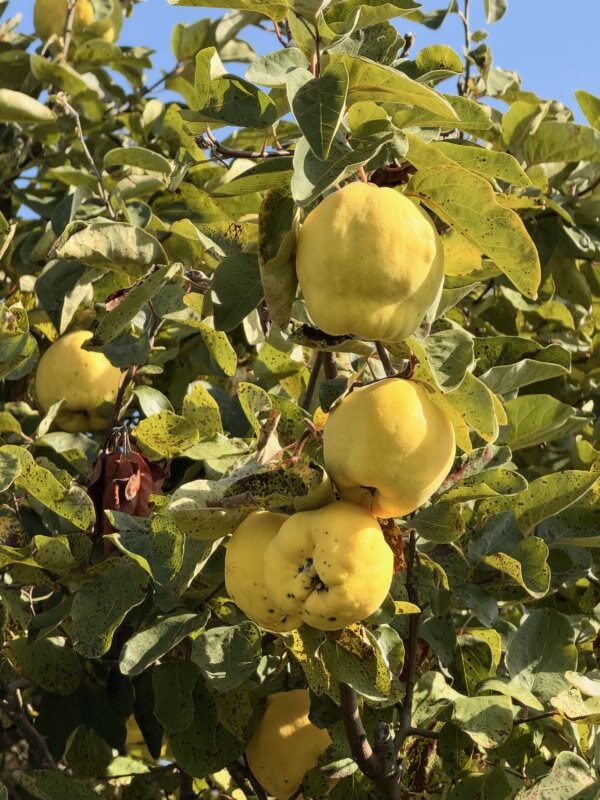
Quince is perhaps the perfect example. Hard and almost austere when raw, it transforms completely when given time in the oven. For this month’s cake, I roast it slowly with butter, honey and thyme, then place it over a nutty spelt and hazelnut cake.
The second cake in our year of seasonal baking is all about patience.

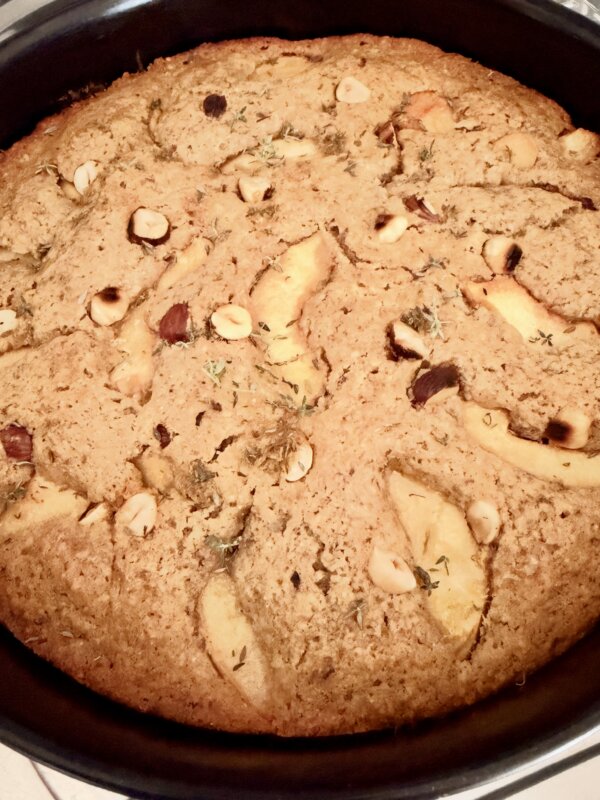
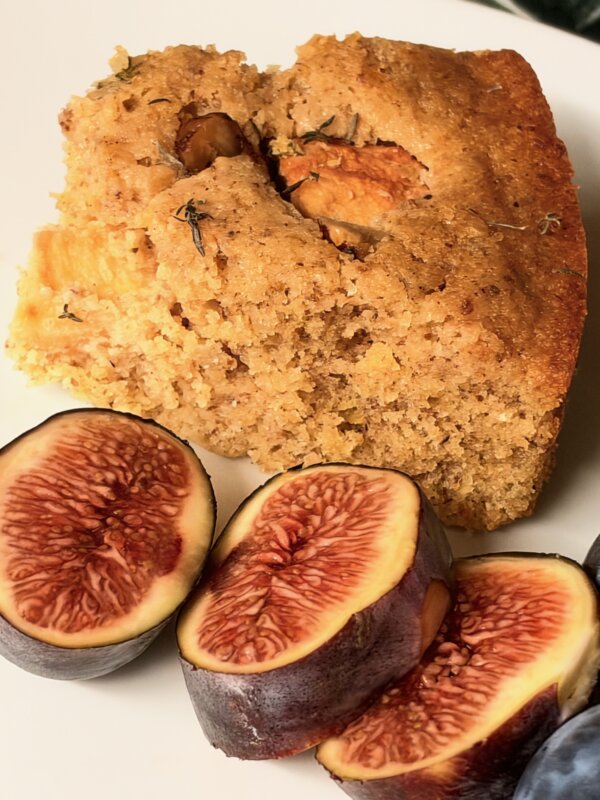
Roasted quince, hazelnut & spelt cake
Ingredients
Quince
- 2 medium quinces
- 25 g unsalted butter
- 1 tbsp liquid honey
- 1/2 lemon juice and zest
- 3 springs fresh thyme
Cake
- 180 g unsalted butter
- 150 g hazelnuts
- 70 g spelt flour
- 60 g white flour
- 120 g brown sugar
- 2 tsp baking powder
- 1/2 tsp sea salt
- zest of 1 lemon
- 3 eggs
- 120 g Greek yoghurt
- 1 tsp vanilla extract
Topping
- 12 hazelnuts halved
- 2 springs fresh thyme
- 1 tsp honey
Instructions
- Heat oven to 180°C fan
- Peel, quarter and core quinces; cut into wedges
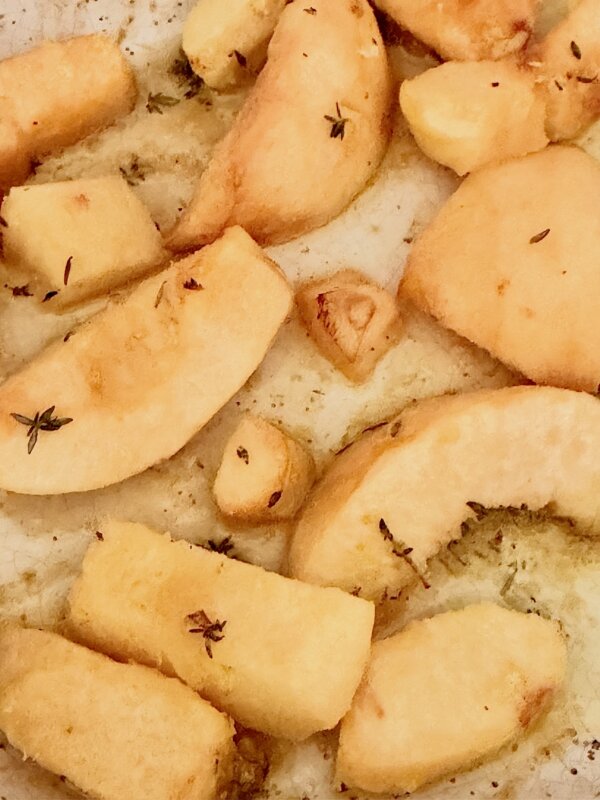
- Place in a roasting dish with butter, lemon juice and thyme. Roast covered for 35–45 minutes, until tender but intact
- Add honey for the last 10 minutes of roasting. Cool
- Reduce oven to 170°C fan
- Toast hazelnuts for 8–10 minutes. Grind 100g finely and chop the rest
- Brown 180g butter; cool slightly
- Mix hazelnut crumbs, spelt, flour, baking powder, salt and lemon zest
- Whisk sugar, eggs, yoghurt and vanilla; incorporate brown butter
- Fold wet into dry and add chopped hazelnuts
- Spread into a buttered 22cm tin
- Arrange quince over the surface
- Bake 45–50 minutes
- Cool 15 minutes. Finish with hazelnuts halves, thyme and a little warm honey
Baker’s Notes
Quince
Quince is not an impatient fruit. Roasting it slowly allows its floral fragrance to develop and turns its firm flesh tender and golden. Don’t rush this part.
Honey
Add the honey towards the end of roasting. This allows it to glaze the quince without becoming too dark and preserves its delicate floral character.
Spelt
A little spelt brings an earthy, toasted quality that sits beautifully alongside quince and hazelnuts. You shouldn’t taste “spelt” as such—it simply gives the cake depth.
Hazelnuts
Toast them before grinding. Keep some pieces slightly larger so the cake has a little texture.
Leave a comment